Why Biometric Image Quality Matters in Identity Registration
Discover why high-quality fingerprint, facial and iris images are essential for accurate biometric identity registration, reliable matching and successful identity management projects.

Introduction
Biometric identity systems depend on more than just the technology used to capture a person's fingerprints, face or iris. The quality of the biometric data collected during registration plays a major role in how accurately and reliably that data can be used later.
A biometric device may have advanced sensors and sophisticated software, but if the captured image is unclear, incomplete or poorly positioned, the quality of the registration can be affected.
For governments, financial institutions and organisations running large-scale identity programmes, good image quality is not simply a technical detail. It is an important part of building a reliable identity database.

What Is Biometric Image Quality?
Biometric image quality refers to how suitable a captured fingerprint, facial image or iris image is for automated processing and comparison.
A high-quality biometric image should contain sufficient detail, be properly positioned and be free from unnecessary distortion or obstruction.
For example:
Fingerprints: Ridge patterns should be clear, complete and captured with sufficient detail.
Facial images: The face should be visible, properly positioned and adequately illuminated.
Iris images: The iris should be clearly visible, in focus and captured with suitable lighting.
Each biometric modality has its own capture requirements, but the objective is the same: collect usable biometric data that can support reliable identification and verification.
Why Does Image Quality Matter?

1. More reliable biometric matching
TBiometric systems compare captured data against stored records. If the original image lacks detail, the system may struggle to identify matching features.
A clear fingerprint image, for example, makes it easier for the software to detect ridge patterns and minutiae. Similarly, a properly captured facial image provides more useful facial features for comparison.
Better capture quality helps reduce avoidable matching errors, although it cannot guarantee a correct match on its own.
2. Fewer rejected registrations and repeat captures
Poor-quality images can lead to failed quality checks or unsuccessful enrolment attempts. This may require an operator to repeat the capture process.
In large-scale identity programmes, repeated captures can increase registration time, create longer queues and put additional pressure on field teams.
Consistent image quality helps make the process more efficient for both operators and applicants.


3. Stronger identity databases
A national or organisational identity database may need to remain useful for many years. The biometric information collected today could be used for future verification, authentication and identity checks.
Capturing usable biometric data from the beginning helps support the long-term reliability of that database.
4. Better operational efficiency
Registration projects often operate in challenging environments, including remote communities, temporary registration centres and mobile field locations.
Lighting conditions, environmental factors, operator experience and applicant positioning can all affect image capture.
Reliable biometric hardware helps operators collect consistent data across different locations and working conditions.
What Affects Biometric Image Quality?
The quality of biometric data depends on several factors, including the capture environment, equipment setup and how the subject is positioned during registration.
For facial image capture, even small adjustments can make a difference. BioRugged's Biometric Camera Field Guide provides instructors with practical steps to help achieve consistent image quality.

Background and lighting
Avoid backlight or strong side lighting.
Use a white matt backdrop positioned closely behind the subject.
Reduce shine and reflections on oily or sweaty skin.

Subject positioning
Position the subject directly in front of the camera.
Adjust the height until the subject's eyes are level with the camera.
Maintain a distance of 50–60 cm between the camera and subject.
Ensure the subject sits upright without leaning forward or backward.

Image capture and review
Make sure the face is fully visible and illuminated.
Maintain a natural expression, with the mouth closed and eyes open.
Adjust LED brightness and colour when necessary.
Review the captured image and repeat the capture if required.
These practical steps help instructors maintain consistent facial image quality across different registration environments.
Fingerprint and iris capture also have their own quality requirements, including proper finger placement, clear ridge detail, correct eye positioning and suitable focus.
Ultimately, reliable biometric registration depends on the right equipment, correct setup and consistent capture procedures..
The Role of Biometric Hardware
Biometric hardware is the starting point of the capture process. A suitable device should provide the sensors and features required by the specific identity project.
However, hardware selection should consider more than technical specifications. Organisations should also evaluate:
Sensor performance and image quality.
Compatibility with the project's biometric software and standards.
Ease of use for registration operators.
Durability in the intended operating environment.
Consistency across different deployment locations.
For mobile registration programmes, these considerations become especially important. Equipment may need to operate in remote areas where lighting, power availability and environmental conditions are not always ideal.

How BioRugged Supports Reliable Biometric Capture
BioRugged develops rugged biometric hardware solutions for identity registration, verification and field operations.
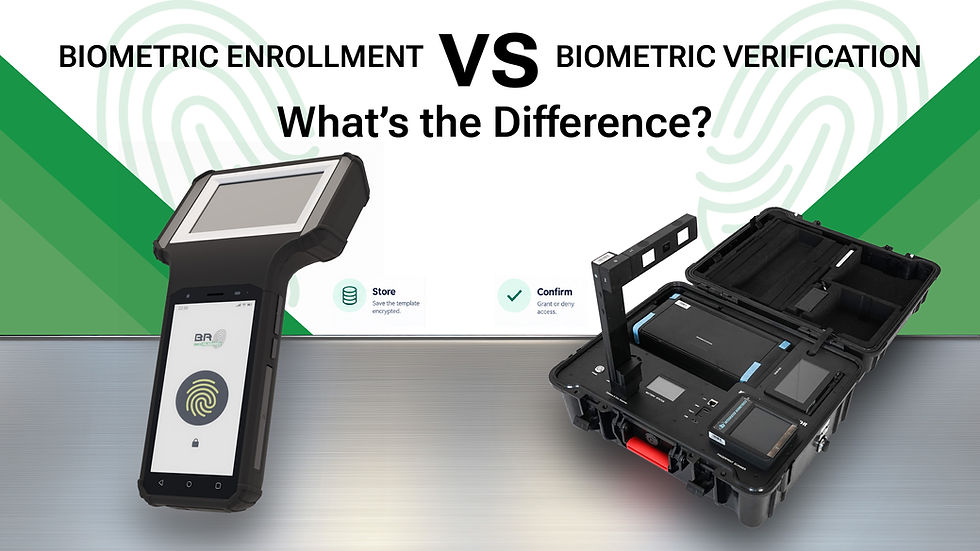
Its range includes configurable biometric enrollment kits, rugged tablets, handheld devices and integrated biometric stations. Depending on the project requirements, these solutions can support fingerprint, facial and iris capture, as well as document and identity data collection.
For mobile registration environments, the Mark series provides configurable enrollment solutions that bring essential biometric components together in a portable setup.
The Marque series offers integrated biometric solutions designed for applications where multiple capture technologies need to work within one system.
By providing hardware designed for demanding operational environments, BioRugged helps organisations build biometric capture setups suited to their project requirements.

Final Thoughts
Reliable identity registration begins with reliable data capture. Even the most advanced biometric software depends on the quality of the information collected at the point of registration.
Clear fingerprint, facial and iris images help support accurate processing, reduce unnecessary repeat captures and contribute to stronger identity databases.
For organisations planning biometric registration projects, image quality should be considered from the beginning — when selecting the hardware, designing the registration process and preparing operators.
Good identity management starts with good data capture.