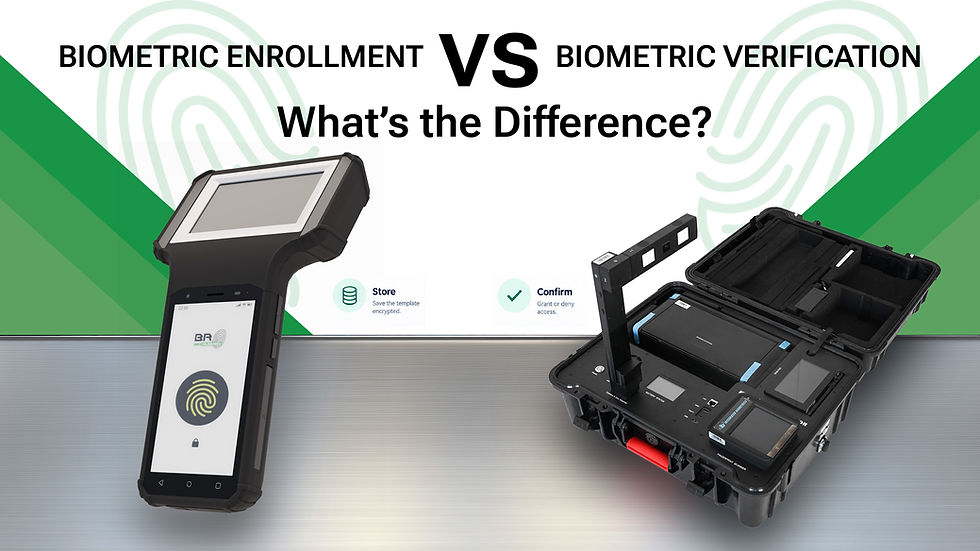
What Does “Rugged” Actually Mean?
For biometric hardware, rugged doesn’t simply mean a device has a thick protective case.
A truly rugged device is designed from the beginning to operate reliably in environments where standard consumer hardware may struggle.
That means considering the entire device — from its enclosure and display to its battery, connectivity, biometric components, and long-term reliability.

Built for the Field
Rugged biometric devices are designed for situations where equipment may be:
Dropped or knocked during transport
Exposed to dust, rain, or changing weather
Used outdoors for long enrollment sessions
Operated far from reliable power
Transported repeatedly between deployment locations

More Than Protection
A rugged biometric tablet should combine physical durability with operational capability.
This can include:

Drop resistanceReinforced construction helps protect the device during everyday field use.
IP-rated protectionProtection against dust and water can be critical for outdoor deployments.

Long battery operationHigh-capacity batteries help keep enrollment teams working throughout the day.
Hot-swappable batteriesOn supported devices, operators can replace the battery without shutting down the system.
Integrated biometricsFingerprint, NFC, smart card, MRZ, cameras, and other technologies can be built directly into the platform instead of relying on multiple external accessories.
Rugged Means Deployment-Ready
The real difference is not simply whether a device can survive a drop.
It is whether the device is designed around the conditions and requirements of the job.
For biometric enrollment, that could mean working in a rural registration center, at a border checkpoint, during a census campaign, or in a temporary field deployment.
Rugged means built for the field — and built for the mission.